
On October 9, the Texas A&M University System and the Tarleton State University Center for Rural Resilience hosted the first Rural Resilience Summit on the RELLIS campus. The event brought together educators, researchers, planners, government officials, and community leaders to focus on strengthening rural vitality across Texas through collaboration and locally grounded solutions.
A central theme repeated throughout the summit was the importance of trust between rural communities and government or institutional partners. Speakers and participants emphasized that lasting progress depends on creating space for communities to clearly define their own needs and priorities, rather than applying one-size-fits-all solutions from outside institutions.
The Texas A&M University System established the Rural Resilience Summit to build a coordinated framework to support rural communities. The two-day event encouraged interdisciplinary collaboration through structured discussion, guiding participants through focused presentations on challenges such as agricultural and economic sustainability, followed by open-ended group sessions designed to translate ideas into action.
The summit’s primary activities included presentations, a poster exhibition, and group work sessions designed to move participants from shared understanding to practical action plans.
On the first day, attendees walked through the cattle pen to view a poster exhibition featuring 30 posters created by event participants. The posters highlighted agriculture, health, and disaster readiness projects led by community members and partners. The exhibition demonstrated that local partnerships are already strengthening rural resilience across Texas and served as a key point of connection throughout the summit.
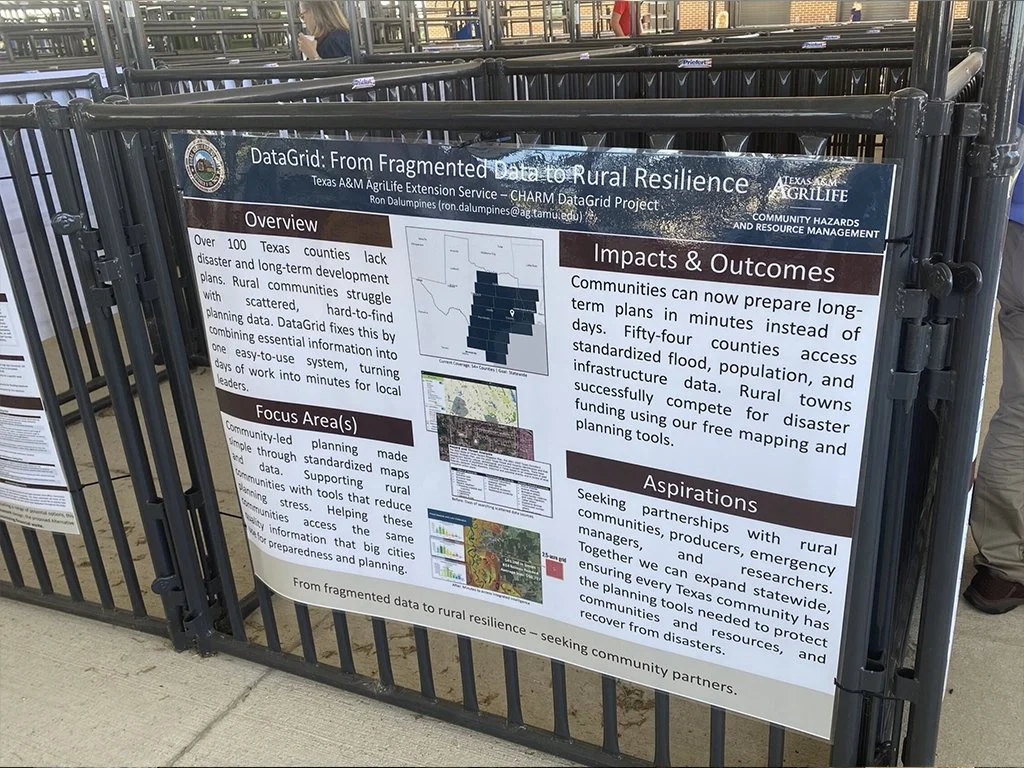
DataGrid Poster.
Group work sessions were held across both days, with participants divided among 14 tables in the cattle pen. Each table was supported by a moderator and a scribe who guided discussion on an assigned rural resilience topic, such as future leadership and agricultural sustainability. During the first day’s session, groups responded to topic-based questions and documented shared ideas. On the second day, each group used those initial responses to develop a practical action plan.
These plans were displayed on large paper posters, allowing participants to walk through the space and draw inspiration from one another. Many of the action plans emphasized education, a recurring theme throughout the summit.
This emphasis aligns with the Texas A&M University System’s broader goal of developing a strong education-to-workforce pipeline for rural communities. This pipeline represents a sequence of choices that begins well before a student applies for a job and ends with rural communities having stable access to the people and skills they need.
It coordinates efforts to help students understand rural needs early, gain relevant skills through education, and ultimately enter careers that strengthen rural communities in fields such as agriculture, healthcare, education, emergency management, and economic development. When implemented intentionally, this approach builds a steady supply of professionals who are trained for rural work and who understand the local context and priorities unique to each community.
Several speakers offered perspectives that helped frame the summit’s focus on collaboration, trust, and practical pathways for strengthening rural communities. Among them were Dr. Susan Ballabina, Executive Vice Chancellor of Texas A&M University; Dr. Kim Alexander, CEO of Collegiate Edu-Nation; and Curtis Donaldson, Executive Director of Rural Medicine at Texas A&M University Health. Their presentations connected the roles of education and leadership in building strong, resilient communities and supporting long-term local success.
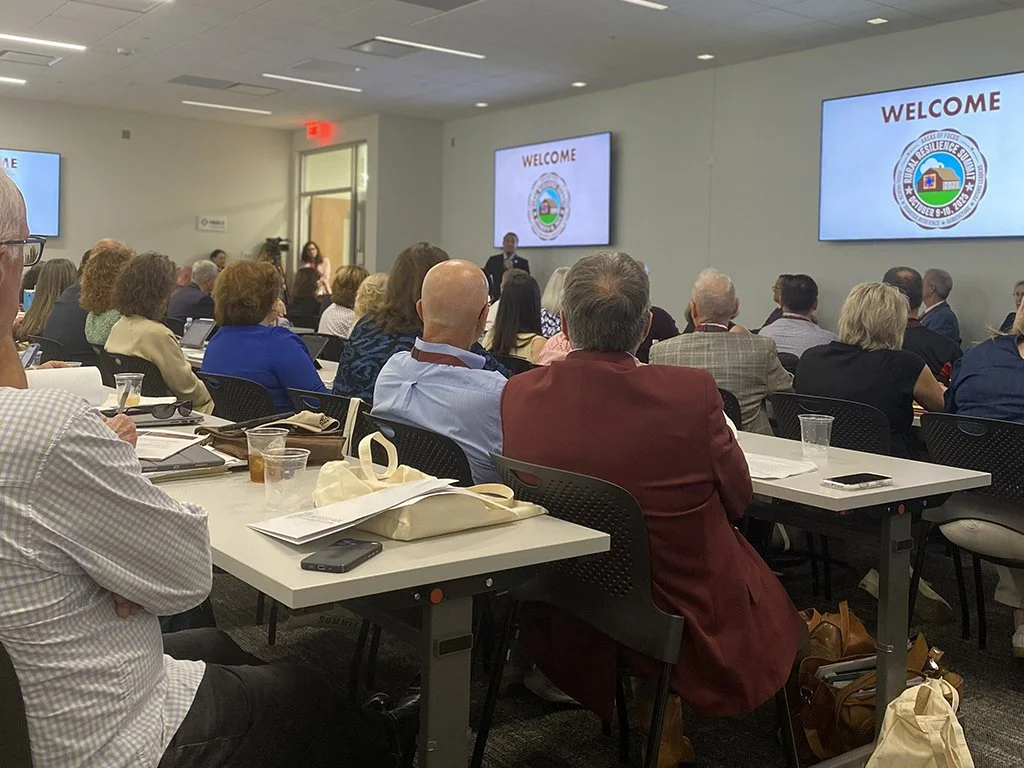
Participants during the Summit Welcome.
Through the establishment of this annual summit, the Texas A&M University System aims to gain national recognition among agricultural educators and leaders as a leading academic system advancing rural resilience. The inaugural Rural Resilience Summit created a strong foundation for an annual event that brings together educators, researchers, community leaders, and agency partners to foster relationships and support ongoing, community-driven action. With continued momentum, the summit could become a statewide catalyst for rural vitality, built on collaboration, trust, shared objectives, and a lasting commitment to rural communities.